
Baton Rouge's Most Walkable Neighborhoods for Young Professionals and Urban Lifestyles in 2026
Downtown Baton Rouge, Mid City, and the Perkins Road Overpass District are the Greater Baton Rouge areas best suited for young professionals seeking walkable, urban living in 2026. Each neighborhood offers a distinct mix of dining, culture, and community within a city that is otherwise largely car-dependent. Significant public and private investment in these corridors—including a major downtown redevelopment vision and an active infrastructure project near Perkins Road—suggests the pedestrian experience in these areas is continuing to improve.
Which Baton Rouge Neighborhoods Are Most Walkable for Young Professionals?
Baton Rouge is, by most measures, a car-centric city—Walk Score data places the city's overall walkability score at 39, meaning most errands still require a vehicle. But within that broader landscape, a handful of neighborhoods stand out as genuine exceptions worth knowing before you relocate.
Downtown Baton Rouge leads the list. Its compact, flat layout, consistent sidewalks, and density of destinations—restaurants, museums, the Mississippi River levee trail, the Shaw Center for the Arts, and the Manship Theatre—make it the closest thing to a traditional urban core that Greater Baton Rouge offers. Events like Live After Five and weekend markets add to the street-level energy that young professionals often look for when choosing where to live.
Mid City is the other anchor. Recognized locally as the heart of Baton Rouge's creative resurgence, it encompasses several distinct sub-neighborhoods—Capital Heights, Garden District, Spanish Town, and others—each with its own character. The Government Street corridor runs through the heart of it, lined with indie boutiques, brewpubs, chef-owned restaurants, and improved bike infrastructure. The Electric Depot, a mixed-use development on Government Street in Mid City, has transformed a former utility site into a hub for restaurants, entertainment, retail, and apartments.
The Perkins Road Overpass District rounds out the top three, offering a blend of suburban ease and walkable amenities that appeals to professionals who want proximity to groceries, bakeries, and neighborhood restaurants without a fully urban setting.
What Makes Each Walkable Neighborhood Distinct?
Understanding the personality of each area helps you match the right neighborhood to your lifestyle priorities—not just your commute.
**Downtown Baton Rouge** is the right fit if you want to live as close as possible to your office, cultural venues, or the riverfront. Housing here skews toward apartments and condos, often in historic buildings or newer mixed-use developments. The Louisiana State Capitol and state office buildings are major nearby employers, making Downtown particularly practical for professionals in government, law, or policy. CATS bus service connects Downtown to Mid City and the LSU area, though driving remains common for longer commutes.
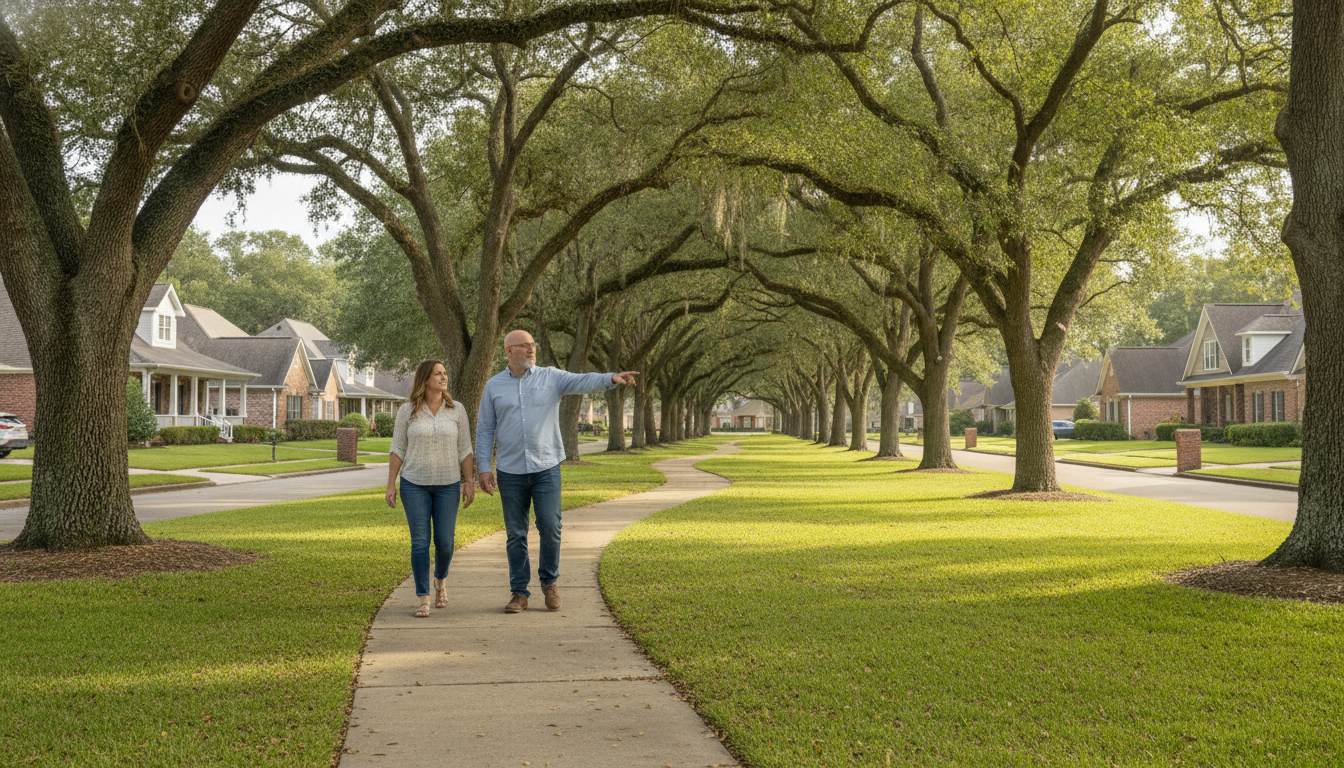
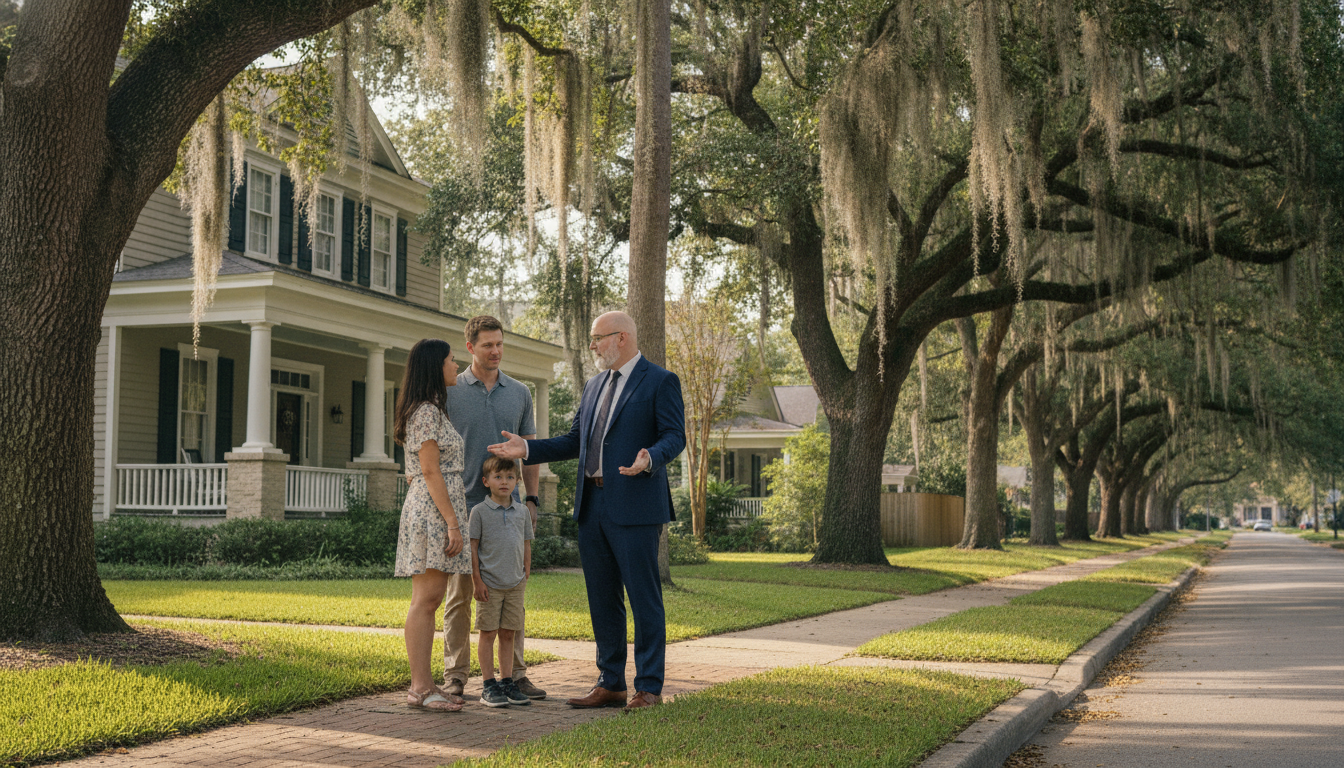
**Mid City's sub-neighborhoods** each have a slightly different feel. Capital Heights is popular with young professionals for its central location, community feel, and walkable streets lined with coffee shops and small businesses. The Garden District offers mature oaks, historic bungalows, and a genuine culture of walking—residents regularly walk to City Park and the Zeeland Street Market on Perkins Road. The Red Stick Farmers Market, held on Saturday mornings downtown at 5th and Main Streets, is also accessible from the Garden District for those willing to make the short trip. Spanish Town, Baton Rouge's most colorful neighborhood, is known for its Mardi Gras parade and easy walking access to galleries, restaurants, and Downtown. One practical note: some parts of the Garden District have uneven sidewalks caused by mature tree roots, so the walking experience can vary block by block.
**The Perkins Road Overpass District and Southdowns** appeal to professionals who want neighborhood-scale walkability—think a Saturday morning walk to a bakery or a short stroll to dinner—without the density of Downtown. The research notes that crossing the overpass on foot has historically been challenging, but a $2.9 million infrastructure project that broke ground in July 2026 is specifically designed to address that, adding a multi-use pathway, improved lighting, signage, and bike racks. Completion was estimated at approximately six months from groundbreaking, so the full benefit of those improvements may still be in progress depending on when you read this—verify current status directly with the MovEBR program or the City-Parish.
Practical Steps for Relocating to a Walkable Baton Rouge Neighborhood
Choosing a walkable neighborhood in Baton Rouge requires a bit more due diligence than it might in a city where walkability is the norm rather than the exception. Here are the practical steps worth taking before you sign a lease or make an offer.
**Check Walk Score at the address level, not just the neighborhood level.** Even within generally walkable neighborhoods, individual blocks can vary significantly. A unit on a main commercial corridor in Mid City may score very differently from one a few blocks into a residential side street. Walk Score (walkscore.com) lets you enter a specific address and see what's actually within walking distance.
**Visit in person at different times of day.** Street-level energy in these neighborhoods shifts between morning, lunch, evening, and weekend. A Saturday morning walk through the Garden District or along Government Street will tell you more about the actual lifestyle than any online description.
**Factor in Baton Rouge's climate.** Even in the most walkable neighborhoods, summer heat and humidity in South Louisiana can make extended outdoor walking genuinely uncomfortable for several months of the year. Proximity to shaded routes, indoor amenities, and air-conditioned destinations matters more here than it would in a northern city. This is a lifestyle consideration worth weighing honestly before committing to a car-free or car-light approach.
**Track ongoing development projects.** Two significant investments are underway: Plan Baton Rouge III, a downtown redevelopment vision unveiled in May 2026 that calls for more than $1.5 billion in early investment and aims to triple the residential population over a decade—though the plan still requires EBR Planning Commission and Metro Council approval before formal adoption—and the Perkins Road Underpass Project, which broke ground in July 2026. Both suggest these areas are actively improving, but also that some disruption or incomplete infrastructure may be present during the transition. Ask your REALTOR® about the current status of projects near any property you're seriously considering.
Questions to Ask and Professionals to Consult Before You Commit
Walkability is one factor in a relocation decision, but it intersects with several others that require professional input rather than general research.
**Flood zone and insurance:** Many of Baton Rouge's most desirable urban neighborhoods—including parts of Mid City and areas near the river—carry flood risk that varies significantly by specific address and elevation. Flood insurance costs and requirements are determined by FEMA flood map designations and your lender's requirements, not by neighborhood reputation. A licensed insurance agent familiar with Louisiana flood coverage should review the specific property before you commit.
**Property taxes and homestead exemption:** Louisiana's homestead exemption and property tax structure can meaningfully affect your carrying costs as an owner, but the calculation depends on your specific property's assessed value and parish millage rates, which can change. A tax professional or your closing attorney can walk you through what to expect for a specific address.
**Condo and HOA documents:** If you're considering a condo or apartment in a mixed-use building—common in Downtown and Mid City—review the association documents carefully with an attorney. Rules around rentals, pets, parking, and assessments vary widely and can affect your lifestyle and resale options.
**Public transit specifics:** CATS bus service connects Downtown, Mid City, and the LSU area, but routes, schedules, and reliability matter for daily commuters. Check current CATS route maps directly for the specific address you're considering rather than relying on general neighborhood descriptions.
**Your REALTOR®'s role:** A local agent familiar with these neighborhoods can help you identify which blocks and buildings best match your walkability priorities, flag active development or infrastructure projects nearby, and connect you with the right professionals for legal, lending, and insurance questions. That local knowledge is especially valuable in a city where walkability varies as much block-to-block as it does in Baton Rouge.

Baton Rouge Home Seller FAQ
Is Baton Rouge actually walkable, or is it a car-dependent city?
Baton Rouge as a whole is largely car-dependent—Walk Score data places the city's overall score at 39, meaning most errands require a vehicle. However, specific neighborhoods within the city, particularly Downtown, Mid City (including Capital Heights, Garden District, and Spanish Town), and the Perkins Road Overpass District, are recognized exceptions where daily walking to restaurants, shops, and cultural venues is genuinely practical. Relocating professionals should focus their search on these specific corridors rather than assuming walkability across the metro.
What is Plan Baton Rouge III and how does it affect Downtown living?
Plan Baton Rouge III is a downtown redevelopment vision unveiled in May 2026 by the Baton Rouge Area Foundation, calling for more than $1.5 billion in early investment and aiming to triple Downtown's residential population from approximately 3,800 to over 10,000 within a decade. The plan focuses on new housing, riverfront development, transit upgrades, and creating walkable hubs. As of its release, the plan still required review and approval by the EBR Parish Planning Commission and Metro Council before formal adoption. Because this is a long-range vision rather than a completed project, buyers and renters should verify current implementation status with the City-Parish or a local real estate professional before making decisions based on projected outcomes.
What is the Perkins Road Underpass Project and when will it be complete?
The Perkins Road Underpass Project is a $2.9 million infrastructure improvement under the MovEBR program that broke ground in July 2026, designed to enhance walkability, parking, and pedestrian and bicycle connections in the Perkins Road Overpass District. The project includes a multi-use pathway, new signage, lighting, and bike racks. Completion was estimated at approximately six months from the July 2026 groundbreaking. Verify current project status directly with the MovEBR program or the City-Parish, as timelines are subject to change.
Which Mid City neighborhood is best for young professionals?
Capital Heights is frequently cited as a top Mid City choice for young professionals, valued for its central location, community feel, and walkable streets with coffee shops, casual restaurants, and small businesses. The Garden District appeals to those who prioritize mature tree canopy, historic architecture, and proximity to City Park and the Zeeland Street Market on Perkins Road. Spanish Town suits those who want easy walking access to Downtown and a neighborhood known for its distinct local culture. The right fit depends on your specific lifestyle priorities and which amenities matter most to you day-to-day.
What should I know about flood risk in Baton Rouge's walkable neighborhoods?
Flood risk in Greater Baton Rouge varies significantly by specific address and elevation, including within desirable urban neighborhoods like Mid City and areas near the Mississippi River. Flood zone designation is determined by FEMA flood maps, and insurance requirements and costs depend on the specific property. This is not something a general neighborhood description can resolve—consult a licensed Louisiana insurance agent and review the FEMA flood map for any specific address you are seriously considering before making a purchase or rental commitment.
Sources
- Plan Baton Rouge III Overview – BRAF
- Plan Baton Rouge III – Spartnerships
- Underpass Project – Better BTR
- Perkins Road Overpass Project Breaks Ground – WBRZ
- Baton Rouge Breaks Ground on $2.9M Perkins Road Overpass Project – The Advocate
- Perk Up Perkins – CPEX
- Top Baton Rouge Neighborhoods for Walkability – Borne2Sell
- Walk Score – Mid City North, Baton Rouge
- Walk Score – Mid City South, Baton Rouge
- Electric Depot – Build Baton Rouge
- Garden District Civic Association
- Red Stick Farmers Market – BREADA