
How to Buy a Home in Greater Baton Rouge in 2026: Every Step from Pre-Approval to the Act of Sale
Buying a home in Greater Baton Rouge follows a structured path shaped by Louisiana's unique civil law system, from mortgage pre-approval through a notary-conducted act of sale. According to market data available at the time of this writing, median sale prices across the Greater Baton Rouge area reached approximately $281,515 in June 2026, though conditions vary by parish and shift over time—verify current figures with your agent. First-time buyers may qualify for Louisiana Housing Corporation assistance programs that can reduce upfront costs significantly; contact the LHC or a participating lender to confirm current availability and terms.
Step 1: Financial Preparation and Mortgage Pre-Approval
The home-buying process begins well before you tour a single property. Lenders will evaluate your credit score, employment history, income, assets, and existing debts to determine how much they are willing to lend. Many loan programs look for a debt-to-income ratio below 43%, though specific thresholds vary by loan type and lender—your lender can tell you exactly where you stand based on your financial profile.
Documents you will typically need to gather include recent pay stubs, W-2s from the past two years, federal tax returns, bank and investment account statements, and a government-issued ID. Having these organized before you contact a lender speeds the process considerably.
Once documentation is submitted, many lenders complete pre-approval within a few business days. The resulting pre-approval letter is commonly valid for 60 to 90 days, and some lenders may extend that window—ask your lender about their specific policy. A pre-approval letter signals to sellers that you are a financially vetted buyer, which can strengthen your position when making an offer.
Working with a lender who is familiar with Louisiana-specific loan programs, including those offered through the Louisiana Housing Corporation, can also open doors to down payment and closing cost assistance that a national lender may not proactively surface. Ask your lender early about program eligibility so you are not leaving money on the table.
Step 2: Engaging a Local Agent, Searching for Homes, and Making an Offer
A licensed real estate agent brings local market knowledge that is difficult to replicate on your own. In Greater Baton Rouge, that means understanding how East Baton Rouge, Ascension, and Livingston Parishes differ in price, inventory, school districts, and flood exposure—all of which shape your strategy. Agents licensed by the Louisiana Real Estate Commission (LREC) are your guide through the MLS, negotiations, and Louisiana's distinctive legal framework.
Once you identify a property, your agent will help you prepare an offer using the Louisiana Residential Agreement to Buy or Sell. This is a legally binding contract, so understanding its terms matters. Effective January 1, 2026, the LREC mandated significant revisions to this agreement. Cash buyers are now explicitly required to provide proof of funds—such as a bank statement—within a specified timeframe, and sellers have the right to terminate if that documentation is not delivered. The updated agreement also includes a dedicated section addressing buyer's broker compensation, clarifying how and from whom that compensation is paid. Buyers and sellers should review the current LREC-approved form with their agent to understand all applicable terms.
Earnest money in Louisiana is governed by Civil Code Article 2624's forfeiture and double-return rule, which differs from how deposits work in common-law states. Earnest money in Greater Baton Rouge transactions is typically in the range of 1–3% of the purchase price, though the amount is negotiable. Your agent can help you calibrate an offer that is competitive without overexposing you.
According to market data available at the time of this writing, median sale prices across the Greater Baton Rouge area reached approximately $281,515 in June 2026, with mid-2026 data for East Baton Rouge Parish showing a median around $280,000. These figures shift month to month—verify current conditions with your agent before making pricing decisions.
Step 3: Inspections, Appraisal, and Securing Your Financing
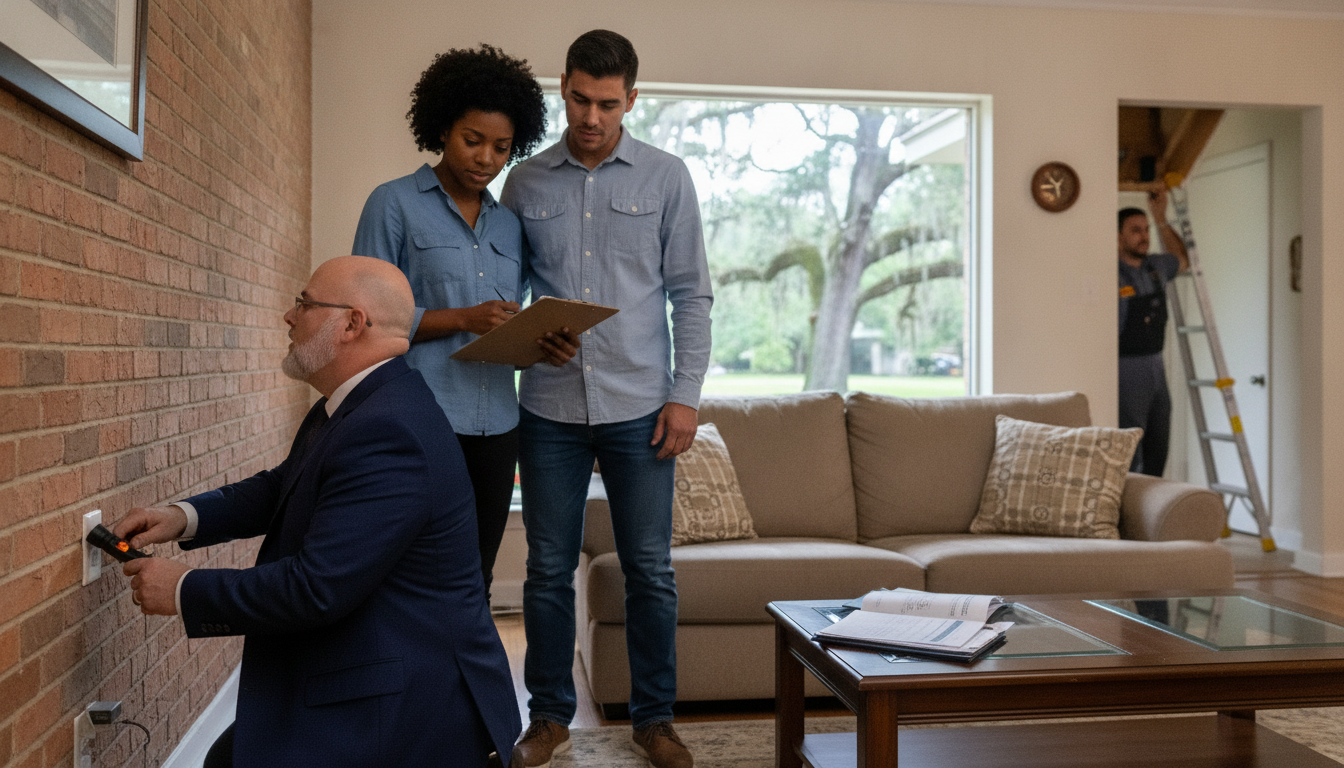
With a signed purchase agreement in hand, the due diligence phase begins. A licensed home inspector will evaluate the property's structural integrity, roof, electrical system, plumbing, HVAC, and other major components. Louisiana relies on private inspections by licensed professionals rather than government-administered inspections, so choosing a qualified inspector is your responsibility. Your agent can provide referrals, but you are free to select your own.
Buyers typically have a contractually specified inspection window—the exact timeframe is set in your purchase agreement and often falls in a range of several days—to complete inspections and submit any repair requests or negotiate a price adjustment. Do not waive this contingency lightly; the inspection period is one of your most important consumer protections in a Louisiana transaction.
Sellers are legally required to provide a Property Disclosure Document identifying known material defects. Federal law has historically required a lead-based paint disclosure for homes built before 1978; confirm the current disclosure requirements with your agent or a real estate attorney. Review all disclosure documents carefully with your agent.
Simultaneously, your lender will order an independent appraisal to confirm the home's market value supports the loan amount. If the appraisal comes in below the purchase price, you will need to negotiate with the seller, make up the difference in cash, or exercise any appraisal contingency in your contract. Once the appraisal is satisfactory, your file moves to underwriting, where the lender's team reviews all financial documents, the appraisal, and the title report before issuing a final loan approval. Respond promptly to any underwriter requests for additional documentation—delays here can push your closing date.
Flood zone status deserves special attention during this phase. If the property is in a designated flood zone, your lender will typically require flood insurance as a condition of the loan, and the cost can be substantial. Investigate the property's flood zone designation early and get an insurance quote before you are too far into the process to reconsider.
Step 4: The Louisiana Act of Sale, Closing Costs, and First-Time Buyer Programs
Louisiana is the only U.S. state operating under a civil law system, and that distinction is most visible at closing. Rather than a standard deed transfer, Louisiana uses an 'act of sale'—a formal legal instrument passed by a notary public or attorney. For an authentic act, the signing requires the notary, the parties, and two witnesses. The notary oversees the execution of all documents and the transfer of funds, then the act of sale is recorded in the Clerk of Court office for the parish where the property is located.
Closings in Greater Baton Rouge typically occur 30 to 60 days after the purchase agreement is executed, depending on financing type and lender timelines. Closing costs generally run 2–5% of the purchase price, covering lender origination fees, title insurance, appraisal fees, recording fees, and prepaid items such as homeowner's insurance and property taxes. In Louisiana, the buyer typically pays for both the owner's and lender's title insurance policies, though in many Baton Rouge-area transactions sellers have commonly contributed to the owner's policy—this is negotiable and should be addressed in your offer.
For first-time buyers, the Louisiana Housing Corporation (LHC) offers several programs worth exploring. As of the research date, the LHC Soft Second Program provided up to $55,000 in down payment assistance and $5,000 in closing cost assistance at 0% interest, forgivable after 10 years. The LHC Resilience Soft Second Program offered up to $60,000 in hurricane-affected parishes, including East Baton Rouge, Ascension, and Livingston, with an annual household income limit at or below $125,000. The Market Rate GNMA Program paired competitive interest rates on FHA, VA, and USDA loans with up to 4% in down payment help. Program terms, income limits, and eligibility requirements are subject to change—contact the LHC directly at lhc.la.gov or ask a participating lender about current availability and terms before counting on any specific benefit.
VA and USDA loans remain zero-down-payment options for eligible buyers, and conventional programs like HomeReady and Home Possible have offered 3% down for income-qualifying borrowers—confirm current eligibility requirements with your lender. Your lender is the right professional to determine which programs you qualify for based on your specific financial profile.
Baton Rouge Home Seller FAQ
How long does it take to buy a home in Greater Baton Rouge from pre-approval to closing?
From the time a purchase agreement is signed, closings in Greater Baton Rouge typically take 30 to 60 days, depending on financing type, lender timelines, and how quickly inspections and appraisals are completed. Add the time needed to obtain pre-approval—which many lenders complete within a few business days once documentation is submitted—and the home search itself, and most buyers should plan for a process of several weeks to a few months from start to finish.
What makes Louisiana's closing process different from other states?
Louisiana operates under a civil law system rather than the common law used in every other U.S. state. Real estate closings are called the 'act of sale' rather than a standard deed transfer, and they are conducted by a notary public or attorney who formally passes the act, oversees document execution, and manages the transfer of funds. An authentic act requires two witnesses in addition to the notary and the signing parties. The completed act of sale is then recorded in the Clerk of Court office for the parish where the property is located.
What are the 2026 changes to the Louisiana Residential Agreement to Buy or Sell?
Effective January 1, 2026, the Louisiana Real Estate Commission mandated revisions to the standard purchase agreement. Cash buyers are now explicitly required to provide proof of funds—such as a bank statement—within a specified timeframe after the agreement is executed, and sellers have the right to terminate the contract if that documentation is not delivered. The updated agreement also includes a dedicated section addressing buyer's broker compensation, clarifying how seller-paid compensation is disclosed and sourced. Buyers and sellers should review the current LREC-approved form with their agent to understand all applicable terms.
What first-time homebuyer assistance programs are available in Greater Baton Rouge in 2026?
The Louisiana Housing Corporation (LHC) offers several programs. As of the research date, these included the Soft Second Program (up to $55,000 in down payment assistance and $5,000 in closing cost assistance, 0% interest, forgivable after 10 years) and the Resilience Soft Second Program (up to $60,000 in hurricane-affected parishes including East Baton Rouge, Ascension, and Livingston, with a household income limit at or below $125,000). Income limits and eligibility rules apply to all programs and are subject to change—contact the LHC directly at lhc.la.gov or a participating lender to confirm current availability and terms before relying on any specific benefit.
How does flood zone status affect a home purchase in Greater Baton Rouge?
Parts of Greater Baton Rouge—including areas in East Baton Rouge, Ascension, and Livingston Parishes—fall within designated flood zones. If a property is in a flood zone, your lender will typically require flood insurance as a condition of the loan, and that cost can be substantial. Flood zone status can also affect eligibility for certain LHC assistance programs. Buyers should ask their agent to identify the flood zone designation of any property under consideration and obtain an insurance quote early in the process, before the inspection period closes.
Sources
- Louisiana Real Estate Commission (LREC) – Consumer Resources
- Service 1st RE – 2026 Purchase Agreement Overhaul
- Louisiana Housing Corporation – Pathways Programs
- LHC Resilience Soft Second Mortgage Program
- The W Group Real Estate – June 2026 Baton Rouge Market Report
- Redfin – East Baton Rouge Parish Housing Market
- Louisiana Civil Code Article 2624 – Justia
- Quill TC – Louisiana Real Estate Closing Guide
- LA Realtors – 2026 Changes to Purchase Agreement and Property Disclosure